


I turn sixty this December.
Some mornings, it feels like walking on a cliff edge. Other mornings, like resting in a harbor and making up my mind about what this life is all about.
Into this mix of vertigo and gratitude, my daughter Leta has come home.
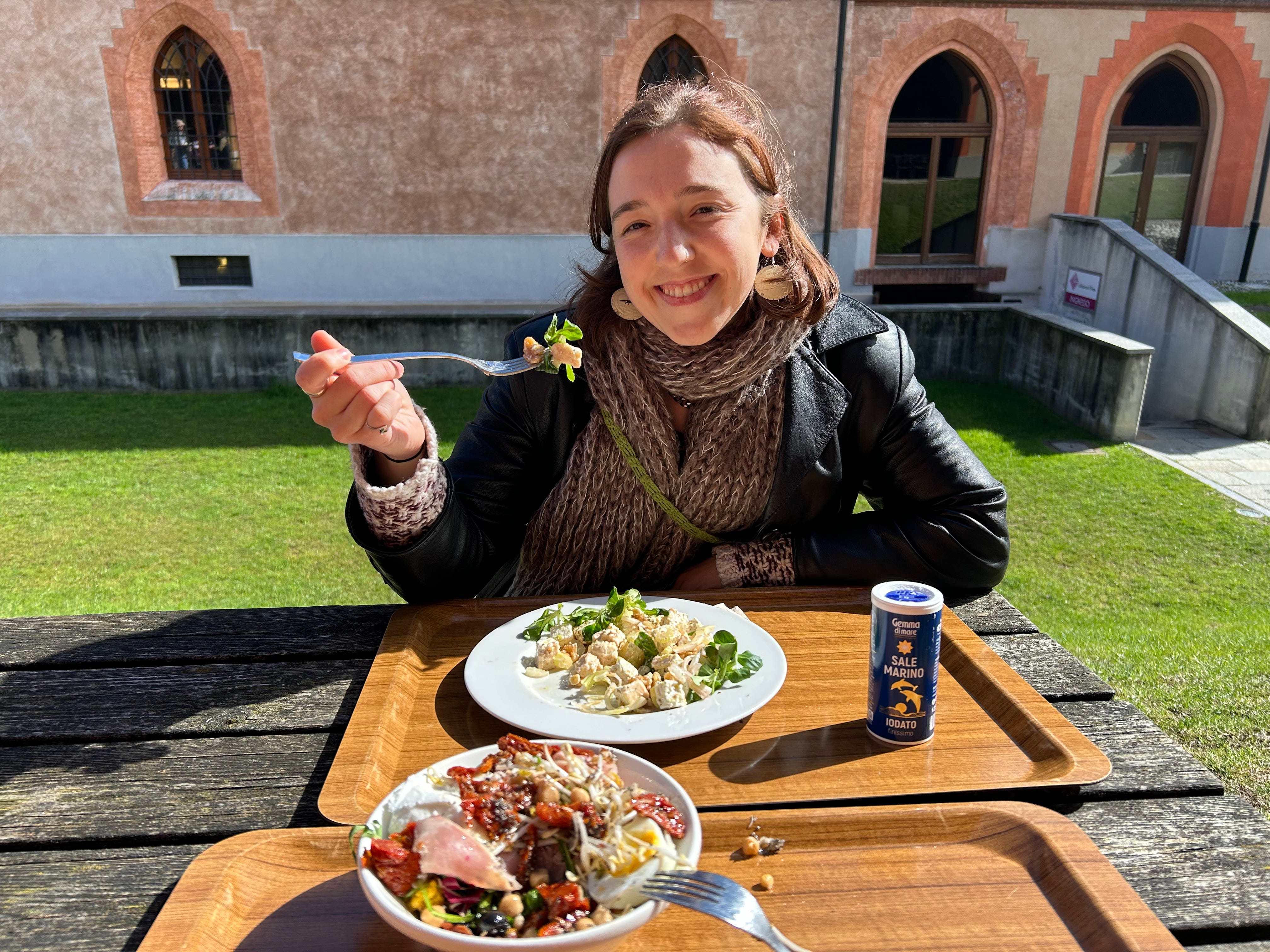
After a year in Italy studying gastronomy and six months in Amsterdam foraging for new professional experiences, the lil’ one is back in New York City, in our family kitchen, in my line of sight, where I can hug and kiss her to my heart’s delight.
She has brought something with her that I didn’t expect: language for a feeling I’ve carried my whole life.
In her Substack, Leta Selmanović: Nourishing, Questioning, Dreaming, she just published a piece called foraging, grief, nostalgia: part 2. This is not about making a please-like-her call to smash that subscribe button. This is just a sixty-year-old father saying: Read her, and if you like what she helps you find, follow her there. She is a great guide.
Diaspora and the lives we didn’t live
In her essay, Leta writes about the movie Past Lives and about the diaspora of our heart—grief for all the versions of our lives that could have been.
The life in Croatia that might have been hers if we had not stayed in the United States.
Then, there’s life in Italy that could have been. Perhaps meeting a democratic socialist guy named Paulo who lives in Perugia and makes polenta. Then there’s life in Amsterdam that could have been with great friends she met there.
Every choice, every “yes” to this life, she reminds me, is also a “no” to a thousand other lives. Some part of us grieves those no’s, even when we’re deeply glad for the yes.
My dad moved from Montenegro to Croatia. My mom moved from Slovenia to Croatia. I then moved to the United States. I also moved from one profession to another, and then to another. And from one religion to another, and then to another. Each migration held the ghosts of lives my parent, I, and my kids didn’t live.
At sixty, these ghosts are real presences in the room. Some feel like regrets, some feel like relief. It is tender work to nod at them all, and say: Thank you. You helped make me. And it is even more tender work to nod at yourself, and say: Through this life, I have lived them all.
Memory within a memory
In her piece, Leta retells a story I once told her: my memory of Bajram, the feast at the end of Ramadan, hosted every year in Zagreb at my aunt’s place.
She notices something I hadn’t quite named. As I remembered the feast—its smells, tastes, the feeling in the room—I was having a “memory within a memory.”
The food on the table in Zagreb once carried me back to my father’s childhood village, where I had visited when I was ten or so. Now, re-telling it to her, the story carried me back there again. Layers on layers. Plates on plates. Generations nested like bowls.
My parents fed me food and stories, and I fed my daughter food and stories. My daughter now feeds me back language for what the stories have been doing to me all along.
Food has been my way home. For decades, I have walked into kitchens to regather myself, to let chopping, stirring, and tasting reassemble my scattered attention. I like to think that the kitchen was the original temple, the first and constant school of human transformation.
Watching Leta move in the world—through kitchens in Italy, the Netherlands, Greece, and the Philippines, through forests with ramps (wild onion) and ramsons (wild garlic) in her hands—I realize she has taken my ancestral thread and woven it into her own life.
And into mine.
Foraging as remembering
In Amsterdam, Leta spent nights picking magnolia petals on her bike ride home, and days slipping into forests to forage tiny amounts of wild food. When she visited us in Harlem, she would take me to Central Park to show me a dozen plants we could eat, like a parent would take a child.
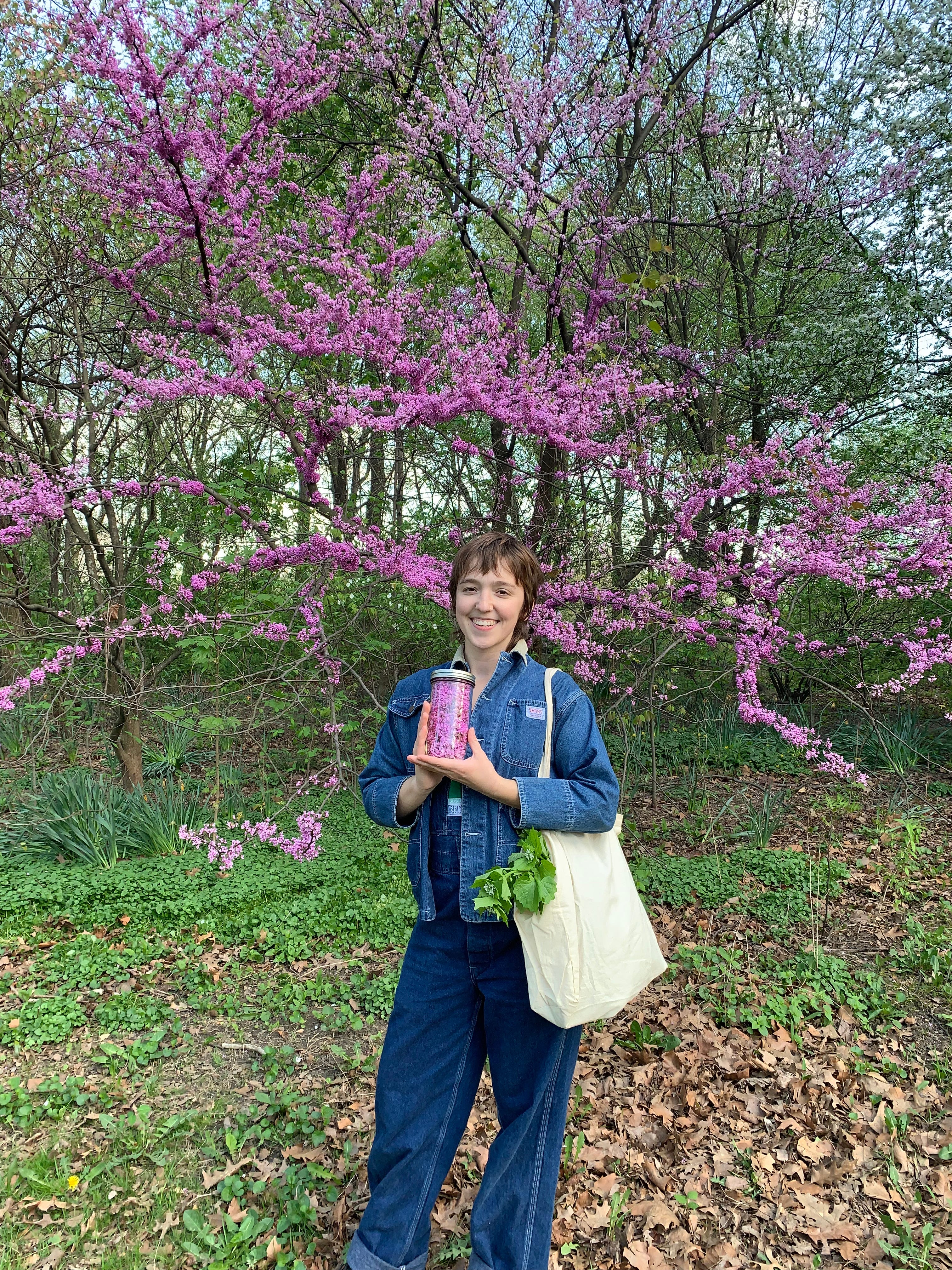
She writes that foraging isn’t really about what you collect—there’s not much in the bag. It’s more like getting to know your neighbors, both flora and fauna. Bending down. Watching. Touching bark and soil. Learning who grows where.
She calls it a way of tracing lost ancestry.
For her, foraging is another way of remembering—an embodied way of saying: I still belong to this earth. I still have a relationship with this place, even if my passport, accent, and rent contract say otherwise.
In my forties and fifties, I tried to think my way into belonging. At sixty, watching my daughter, I wonder if I could forage my way into belonging.
The Garden of Love (and a man with emerald eyes)
When Leta comes back to Harlem, she goes straight to a community garden in our neighborhood called the Garden of Love.
Other kids coming back to New York like to “hit the city.”
She?
She needs soil.
She needs neighbors.
She needs a place that smells like life.
She plants cucumbers, tends wine cap mushrooms, and gets to know the people who move through that little patch of earth in the Harlem country of black asphalt. That garden is not quite street, not quite home. It’s a konoba in New York drag. A room between inside and outside, where people and stories and land meet.
One day, as she and a neighbor stand outside the garden gate, a man stumbles into them. He has just been stabbed. There’s blood, panic, sirens on their way. And also, his eyes. Leta notices his eyes are a luminous, startling green.
Her neighbor compliments him on them as they wait for the ambulance. Maybe to distract him from the pain. Maybe because beauty has its own emergency.
They tuck his belongings into the plants, allowing the garden to hold his belongings while he rides away in the ambulance. He never comes back for them.
“Perhaps the land remembers us more than we remember it,” she writes.
I had to put the laptop down after that line.
I have spent so much of my life trying to remember where I come from—village, city, language, religion, past roles, future plans. I am now coaching people who are trying to remember (or discover) what their life is all about.
And here is my daughter suggesting that all along, the land has been doing the remembering for us. We are all held by meaning we don’t understand, don’t have to understand, and let alone invent.
A word for this: solastalgia
Leta introduces a word: solastalgia.
It’s the homesickness you feel, not because you are far from home, but because you are watching your home change in ways you cannot stop.
City storefronts closing.
Storms. Flooding.
ICE and AI.
You’re still, but the home is shifting. We have all become immigrants, not because we have moved, but because everything around us is moving. We are displaced and have to immigrate over and over again.
At sixty, solastalgia feels familiar.
(I wrote about this tug-of-war between home, displacement, and getting lost in an earlier New Glossary entry, What Heart Wants.)
The body changes. The city changes. The world changes. The internet eats entire parts of our lives (years of my work disappeared in a hacked LinkedIn account). Systems we trust crack and fall apart, or attack, showing their teeth.
There is grief in realizing that the place you love will not stay as it is.
But if the land remembers us, then we are not the only ones doing the holding. If the soil keeps traces of our footsteps, maybe we don’t have to keep all of our stories straight in our heads. Maybe belonging is not a performance we must constantly maintain, but a relationship we keep returning to.
Glossary gains (for you, dear reader)
Let me end with an invitation.
What might learning about solastalgia mean for you?
Let the land remember you.
You don’t have to hold all your history perfectly. Let a park bench, a kitchen table, a stretch of sidewalk, a community garden do some remembering for you. Visit them. Touch them. Say hello.Notice your unlived lives with kindness.
When you feel that ache for the life you didn’t live, treat it not as a mistake but as a kind of ancestor. It stood watch while you chose this one. You can honor it without abandoning yourself.Practice tiny acts of foraging.
You don’t need a forest. Pick herbs from a windowsill. Learn the names of two street trees on your block. Step into your kitchen and let chopping an onion from a local bodega be an act of “knowing your neighbors.”Create a konoba corner.
A threshold place, like Leta’s Garden of Love. A porch step, a stoop, a Zoom room, a recurring dinner. A place that is yours—and also belongs to others. A place where the door (literal or figurative) regularly stays open.Apprentice yourself across generations.
If you’re older, let yourself be taught by someone younger. If you’re younger, receive the stories coming your way—then give them back altered, deepened, made more true. That’s how memory within memory works.
If this resonates with you, I would love for you to read her full piece, foraging, grief, nostalgia: part 2, and, if you feel like it, subscribe to Leta on Substack.
From one Ordinary Mystic to another: Notice how meaning travels between generations—and how, somehow, the land knows all our names.
Thanks for reading The New Glossary. This post is public, so feel free to share it.
— Samir
👉🏼 Leta on Substack!
👇🏾 I love to hear from you in the comments. Where in your life do you feel solastalgia—and what places, people, or practices help you remember that you still belong?
I love the thought that the land asks us to let it hug us into its memories of us. This holds space for the blessing of the roads not taken upon the roads taken, in walks peace….
And what an endearing picture, the dad whose daughter used to sit at his feet now sitting at her feet. Thank you both!