


It is becoming abundantly clear: something has to change, starting with how we hold our attention. Our communities and our entire species are about to make a turn here. How can we participate?
This year has had the texture of speed. Headlines, polarization, wars, elections, migration, fires, AI slop everywhere, loneliness everywhere. Many of us are living with a low-grade hum of dread and a high-grade demand to function. We’re tired. We’re disoriented.
I believe it will begin (and it is already beginning) with the practice of seeing differently.
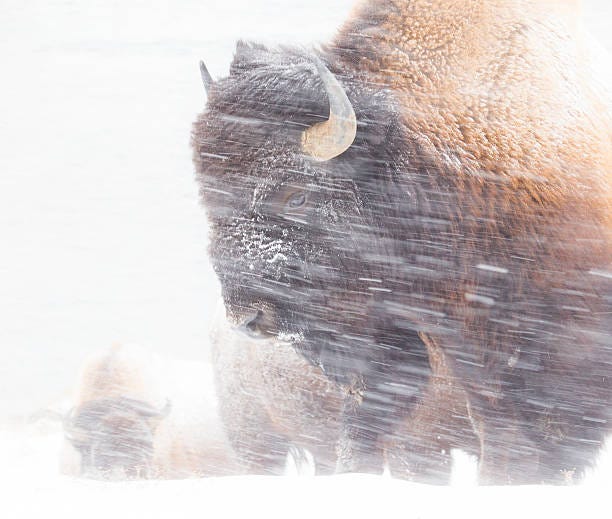
There’s an old image I return to: when the storm comes, cows turn away, hunker down, and prolong the pain. Buffalo run toward it, then walk into it, shortening the suffering. Seeing differently isn’t a spa day from the world. It’s choosing the buffalo move: turning toward what’s here so that we can meet it with courage and creativity.
Twenty years ago, on a whim, I went to a Jewish Mysticism Seminar at 92Y (a venerable public learning institution in Manhattan). I was in the front row, a teacher’s pet at the edge of my seat, when Rabbi Lawrence Kushner looked at us and said, “You. Are. Mystics.”
“Who, me?” I blurted out, startling myself.
“Yes, you,” he said.
I staggered onto the sidewalk of Lexington Avenue during the seminar lunch break, drunk with the discovery of human power to see differently. This mystic courage went beyond what I’ve experienced in my home, educational, religious, or professional life. (Mystic courage: the willingness to perceive what is without recoiling)
I was still dizzy when we reconvened. The rabbi went on to say that “for most people, their mystical experiences occur for about twenty seconds, about every two years.” That seemed about right.
What if, I asked myself, the twenty seconds became a daily minute?
Soon after the seminar, the angular life of computer screens, city streets, and filing systems of our modern minds took over. I got back to familiar worries that have been squatting in my head ever since I can remember.
But that’s not how the story ends. My muscle of astonishment warmed up, relaxed, and awakened, and I found some long-needed rest from the numbing sanity of my strategic mind and defended self.
After the experience, a new sense of freedom would rarely appear. It happened while taking my daughters for a walk. I would sometimes blurt out, or even scream, “Joy, joy, joy!” to them (As kids, they were a bit embarrassed on the street. Now, as adults, they see it as a tic of their aging dad). Then, while running, cooking, or cleaning. A brave step forward was trying it while paying bills. Then, while feeling worried, sad, or anxious. Then, the latest, while enraged.
Is it possible to think these thoughts of joy and feel these feelings of surprising appearance, belonging, becoming, and then glorious disappearance? To live alive, everywhere and always?
Seeing differently doesn’t make us float above the mess. It makes you more available to it. It changes what you do in meetings, in conflict, in parenting, in voting, in the way you spend, in what you refuse, in how you apologize, and in what you build. It makes you harder to hypnotize and easier to mobilize.
It’s an intoxicating prospect for those who want to change the world: Learning to see the world as ordinary mystics, urban monks, suburban wizards, or corporate shamans (How would you call yourself?). Not biannually. Daily.
You and me. Daily.
To be clear: I’m not talking about using wonder as anesthesia. If “seeing differently” makes us less honest, less accountable, or less willing to face suffering, then it’s not seeing, it’s sedation. This is not about feeling better while the house burns. This is about seeing the fire clearly enough to carry water with steadier hands.
We want to change the way we see the world and help those we love and lead to do the same. So let’s set down Mevlana Rumi, Theresa of Avila, and Albert Einstein for a moment. Let’s set down Anne Frank, Mr. Rogers, and David Whyte, too. Let’s even set down our compassionate teachers, life-nourishing artists, and family members who showed us how to be in love with life. They are fantastic guides, and we owe them our lives.
Yet, they have all been saying, loud and clear (here in Rumi’s words):
Don’t be satisfied with our stories, how things
have gone with others. Unfold
your own myth
Our steps toward a safe and thriving future do not have to be as difficult as we imagined. We don’t have to control the process from start to finish. You can begin with the mystic courage of seeing differently and learning to fully inhabit a life you cannot control, and do your life’s work that has no competition.
Before you answer the question below, try a tiny inventory of the year: one or two moments you shrank to stay safe, and one or two moments you expanded without knowing the outcome. Don’t judge them. Just name them. That’s already the practice.
What was a recent occasion when you’ve hazarded yourself experiencing life greater than what you can control? Perhaps starting a conversation with a stranger? Or by giving more than you can afford and noticing more than you can take in? Or by your bold stand for justice? How about a vulnerability? Or letting go of what you know and asking a more beautiful question?
May you find yourself surprised, in 2026, by the ways you can see the world.
Love this!